

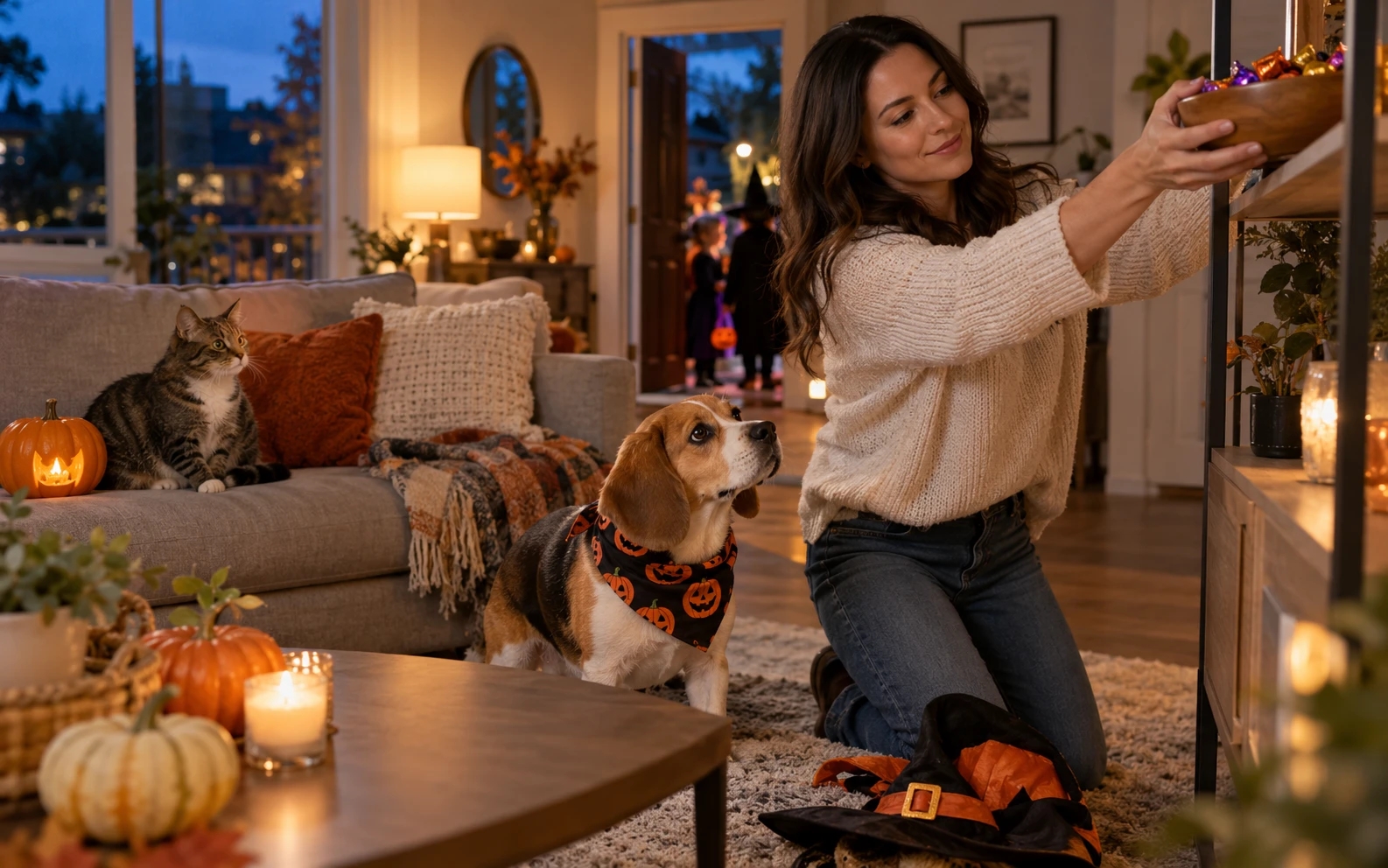
Your dog finds an unattended candy bowl. Your cat disappears when the doorbell rings. A festive costume that looks adorable suddenly makes your pet uncomfortable. These situations might seem minor, but Halloween can introduce unexpected health and safety risks for dogs and cats. For pet owners in Vancouver, British Columbia, preparing for October 31 involves more than choosing decorations and handing out treats. Chocolate, sugar-free candy, unsafe costumes, unfamiliar visitors, and open doors can lead to injuries, poisoning, or significant anxiety.
Following practical Halloween pet safety tips helps protect your companion while allowing your household to enjoy the celebrations. This guide explores the most important Halloween hazards, including toxic candy ingredients, costume-related dangers, environmental stress, and situations that require immediate veterinary attention.
Why Halloween Can Be Dangerous for Dogs and Cats
Halloween temporarily changes a pet's familiar environment. Normally quiet homes may become crowded with visitors, ringing doorbells, flashing decorations, and unfamiliar sounds. Pets may encounter foods and objects that are not usually accessible.
These changes introduce several risks:
- Toxic food exposure: Chocolate, xylitol-containing sweets, and raisins can cause serious medical complications.
- Choking and intestinal obstruction: Candy wrappers, decorations, and costume accessories may be swallowed.
- Costume-related injuries: Tight clothing or loose accessories can interfere with movement, breathing, or comfort.
- Stress and anxiety: Unfamiliar visitors, costumes, and loud celebrations may frighten sensitive animals.
- Accidental escapes: Frequent door openings can allow frightened dogs or cats to run outside.
- Burns and electrical injuries: Candles, electrical cords, and decorations may attract curious pets.
Understanding these dangers before Halloween makes prevention easier.
Halloween Candy Dangers for Pets: What Owners Must Know
Candy is among the most common Halloween-related household hazards. Although some sweets appear harmless, ingredients suitable for human consumption can have very different effects on dogs and cats.
1. Chocolate Poisoning in Dogs and Cats
Chocolate contains theobromine and caffeine, substances known as methylxanthines. Dogs and cats are more sensitive to these compounds than humans. Excessive exposure can affect the nervous system, digestive system, and heart. The severity of chocolate poisoning depends on the amount consumed, the chocolate type, and the animal's body weight.
Dark chocolate, baking chocolate, and cocoa powder generally contain higher concentrations of methylxanthines than milk chocolate. Signs may include vomiting, diarrhoea, increased thirst, restlessness, a rapid heartbeat, tremors, and seizures. What should you do? Contact a veterinarian promptly if your pet consumes chocolate. Do not assume a small quantity is harmless, particularly for smaller animals.
2. Xylitol in Sugar-Free Candy
Some sugar-free candies, chewing gums, mints, and baked goods contain xylitol, sometimes labelled birch sugar. Xylitol is particularly dangerous for dogs because it can trigger a rapid release of insulin, causing dangerously low blood sugar. Severe exposures may also result in liver injury.
Symptoms can develop rapidly and may include:
- Vomiting and weakness
- Unsteady walking
- Trembling
- Collapse
- Seizures
A dog that consumes a product containing xylitol requires immediate veterinary attention, even if no symptoms are apparent. Check ingredient labels carefully because not every sugar-free product contains xylitol.
3. Raisins and Other Dangerous Treat Ingredients
Raisins may be hidden in snack mixes, baked goods, and chocolate-covered treats. Grapes and raisins can cause acute kidney injury in dogs. The amount required to cause harm is unpredictable, so even a seemingly minor exposure should be evaluated promptly. Fatty or creamy holiday treats can also cause digestive problems and may contribute to pancreatitis in susceptible animals. Pancreatitis is inflammation of the pancreas and may cause vomiting, abdominal pain, lethargy, and reduced appetite.
4. Candy Wrappers and Packaging
Sometimes the packaging is as concerning as the treat. Plastic, cellophane, and foil wrappers can create choking hazards or intestinal obstructions if swallowed. Curious kittens and playful dogs may chew discarded wrappers even after the candy has been eaten. Store used packaging in secured rubbish bins and check floors, furniture, and children's play areas for discarded sweets.
Which Halloween Treats Are Dangerous for Pets?
Halloween item | Potential health risk | Recommended action |
Dark or baking chocolate | Heart and nervous system toxicity | Contact a veterinarian immediately |
Milk chocolate | Chocolate toxicity depending on dose and pet size | Seek prompt veterinary guidance |
Candy containing xylitol | Severe low blood sugar and possible liver injury in dogs | Seek emergency care |
Raisin-containing treats | Acute kidney injury in dogs | Seek immediate assessment |
High-fat sweets | Digestive upset or pancreatitis | Contact a veterinarian for advice |
Candy wrappers | Choking or gastrointestinal blockage | Seek assessment if swallowed |
This table is a general safety guide, not a substitute for veterinary assessment.
What Should You Do If Your Dog Eats Halloween Candy?
Discovering that your dog has eaten Halloween candy can be frightening. The most important response is to act promptly without attempting unapproved home treatments.
Step 1: Remove the Remaining Candy
Prevent further ingestion by moving candy bowls, wrappers, and other food away from your pet. Check whether any other animals may have consumed the same product.
Step 2: Identify What Your Pet Ate
Gather information that may help the veterinary team assess the risk. Record the candy name, ingredients, estimated amount consumed, time of ingestion, your pet's approximate weight, and any current symptoms. Keep the original packaging whenever possible.
Step 3: Contact a Veterinary Professional
Call your regular veterinarian or an emergency animal hospital for guidance. If you suspect chocolate, xylitol, or raisin ingestion, seek professional advice immediately rather than waiting for visible symptoms. Intercity Animal Emergency Clinic provides emergency veterinary care in Vancouver, including assessment and treatment for urgent medical concerns.
Step 4: Avoid Unsafe Home Remedies
Do not induce vomiting or administer salt, hydrogen peroxide, human medications, or other home treatments unless specifically instructed by a veterinary professional. Inducing vomiting can be dangerous in certain situations, including when an animal is having seizures, is struggling to breathe, or cannot protect its airway.
Step 5: Follow Veterinary Recommendations
Depending on the suspected toxin, amount consumed, and clinical condition, a veterinarian may recommend examination, laboratory testing, monitoring, or treatment. The earlier a potentially serious exposure is assessed, the more options may be available for appropriate care.
Pet Halloween Costume Safety: What Makes an Outfit Safe?
Halloween costumes can be enjoyable for some pets, but not every animal is comfortable wearing clothing. An outfit should never interfere with your pet's normal movement, breathing, vision, hearing, or behaviour.
Avoid Restrictive Clothing
Costumes that fit tightly around the neck, chest, or legs can make walking and resting difficult.
Masks or accessories covering the face may obstruct sight and interfere with natural communication. Choose lightweight, breathable clothing that allows your pet to move comfortably.
Watch for Overheating
Thick fabrics and layered costumes can make it difficult for animals to remain comfortable, especially in warm indoor environments. Watch for excessive panting, drooling, agitation, or weakness. Remove the costume immediately if your pet shows signs of discomfort.
Remove Choking Hazards
Buttons, bells, ribbons, strings, plastic eyes, and detachable accessories can become dangerous if chewed or swallowed. Examine every costume before use. Choose simple designs without loose components.
Recognise Costume-Related Anxiety
Some pets tolerate costumes, while others find them stressful. Signs of discomfort may include freezing, hiding, flattened ears, repeated scratching, excessive licking, growling, or attempts to escape the outfit. Allow your pet to try the costume before Halloween and observe their response. If the animal appears distressed, remove the costume. A lightweight festive bandana may be a more comfortable alternative.
Important: Never leave a pet unattended while wearing a Halloween costume.
Keep Halloween Decorations Safe for Pets
Decorations help create a festive atmosphere, but some can cause burns, electrical injuries, or gastrointestinal problems.
Candles and Open Flames
Curious cats may investigate glowing pumpkins, while dogs can accidentally knock over candles with their tails. Use battery-operated LED lights wherever practical. Place decorations on stable surfaces that pets cannot easily reach.
Electrical Cords and Decorative Lighting
Chewing electrical cables can cause oral burns and potentially serious electric shocks.
Secure cords behind furniture or protective coverings and inspect them for damage. Keep lighting equipment away from water bowls and areas where pets play.
Artificial Cobwebs and Small Decorations
Artificial cobwebs, plastic spiders, fake bones, and decorative ribbons can become choking hazards or cause intestinal obstruction. Strings and ribbons are particularly concerning for cats because swallowed linear objects can damage the digestive tract.
Glow Sticks
Glow sticks may attract curious animals. Biting them can cause significant mouth irritation and drooling, while broken plastic may create additional injury risks. Keep these products securely stored and contact a veterinarian if exposure occurs.
How to Reduce Halloween Anxiety in Dogs and Cats
For many animals, Halloween is more stressful than exciting. The sound of repeated doorbells, unfamiliar voices, masks, and unusual movements may trigger fear-related behaviours. Common signs include pacing, trembling, hiding, excessive vocalisation, panting, and refusing food or treats.
Create a Quiet Retreat
Prepare a peaceful room away from your home's busiest entrance. Include comfortable bedding, fresh water, familiar toys, and a safe resting area. Cats should also have access to a clean litter box and suitable hiding spaces.
Maintain Familiar Routines
Try to keep feeding, exercise, and resting schedules consistent. For dogs, consider completing regular exercise before busy trick-or-treating hours. Gentle background music or appropriate enrichment toys may help some animals settle.
Do Not Force Social Interaction
A frightened dog should not be forced to greet visitors. Similarly, avoid pulling a nervous cat from its hiding place to participate in festivities. If your pet has a history of severe anxiety, discuss management options with your regular veterinarian before Halloween. Never administer human anxiety medication without veterinary instructions.
Prevent Accidental Escapes During Trick-or-Treating
Frequent door openings create one of Halloween's most overlooked dangers. Even normally well-behaved pets may bolt when startled by unfamiliar visitors.
Protect Dogs During Halloween Walks
For safer evening walks:
- Exercise your dog before the busiest neighbourhood celebrations.
- Use a secure leash and properly fitted collar or harness.
- Avoid crowded areas if your dog becomes nervous.
- Prevent scavenging of discarded candy and food.
- Use reflective equipment to improve visibility after dark.
If your dog becomes frightened by people wearing costumes, calmly increase the distance from the situation.
Keep Cats Safely Indoors
Cats may be especially vulnerable to escape when doors repeatedly open. Keep cats indoors during Halloween activities, ideally in a quiet area separated from the entrance. Provide water, food, hiding spots, and a litter box.
Update Identification Details
Confirm that your pet's identification tag and microchip registration details are accurate.
Check that external doors, windows, and gates close properly. Consider placing a reminder near the entrance asking visitors and family members to keep doors secured.
Offer Safe Halloween Treats Instead of Human Candy
Pets do not need chocolate or sugary sweets to participate in Halloween. Suitable alternatives may include species-appropriate commercial treats, puzzle feeders containing their normal food, or veterinarian-approved enrichment toys. Some pets may also enjoy small quantities of plain, unsweetened pumpkin or other individually appropriate foods.
Avoid pumpkin pie filling, artificial sweeteners, heavily seasoned foods, and unfamiliar treats if your pet has digestive sensitivities. Introduce new foods cautiously and remember that treats should form only a small part of a balanced diet.
When Should You Visit an Emergency Vet in Vancouver?
Certain symptoms require immediate veterinary attention.
Seek emergency assistance if your pet experiences:
- Difficulty breathing or suspected choking
- Seizures or collapse
- Severe weakness or inability to stand
- Persistent or severe tremors
- Suspected xylitol, chocolate, or raisin poisoning
- Severe abdominal pain or swelling
- Serious injury or suspected intestinal obstruction
Other concerns, including mild anxiety or small changes in appetite, may require guidance from a regular veterinarian rather than immediate emergency treatment. However, sudden deterioration or suspected poisoning should never be ignored.
Intercity Animal Emergency Clinic offers 24/7 emergency veterinary services for pets requiring urgent assessment.