

Bringing home a puppy is exciting, but waiting too long to introduce them to the world can make everyday experiences harder later on. The sound of a vacuum cleaner, a stranger wearing a hat, a car ride, a veterinary exam, another dog, or even walking across an unfamiliar surface can feel overwhelming to a puppy who has had limited positive exposure.
That is why puppy socialization deserves attention from the very beginning. Veterinary behavior guidance identifies the first few months of life as an especially important developmental period. UC Davis describes the critical social development period as approximately 3 to 14 weeks of age, when puppies tend to be highly curious and receptive to their surroundings.
But puppy socialization isn't about racing through a checklist before a magic deadline. It is about providing safe, controlled, positive experiences at the right pace and continuing those experiences as your puppy grows.
What Is Puppy Socialization?
Puppy socialization is the planned process of introducing a young dog to the people, animals, environments, sounds, surfaces, handling, and everyday situations they may encounter throughout life. The goal isn't simply to make your puppy "friendly." Good socialization helps a puppy learn that new experiences can be safe, manageable, and sometimes rewarding.
For example, socialization can include positive exposure to:
- Adults and children
- People wearing hats, uniforms, glasses, or carrying umbrellas
- Calm, healthy dogs
- Household appliances and everyday noises
- Cars and car rides
- Veterinary environments
- Grooming and handling
- Different flooring and outdoor surfaces
- Bicycles, wheelchairs, and strollers
- Traffic and city sounds
- Doorbells and visitors
- New rooms and buildings
- Being briefly separated from family members
AAHA emphasizes that socialization is more than puppy playdates. The objective is to help puppies become calm and comfortable around people, animals, and different situations, rather than teaching them that every dog or person must become an exciting interaction.
When Is the Puppy Socialization Window?
One of the most common questions new owners ask is:
When should I start socializing my puppy?
There isn't a single birthday on which socialization suddenly stops working. However, veterinary behavior research recognizes an early sensitive period when puppies are particularly receptive to learning about their environment.
UC Davis identifies the critical social development period as approximately 3–14 weeks. The American Veterinary Society of Animal Behavior (AVSAB) similarly identifies the first three months of life as the primary and most important period for puppy socialization.
Why Are the First 3–14 Weeks So Important?
During these early weeks, a puppy's brain is rapidly processing information about what is normal, safe, threatening, rewarding, or unfamiliar. Positive experiences during this period can help establish useful associations. Imagine two puppies encountering a vacuum cleaner.
One puppy sees it from a comfortable distance while receiving treats and is allowed to move away. Over several short sessions, the sound becomes ordinary. Another puppy encounters the vacuum suddenly at full volume, becomes frightened, and is forced to stay nearby.
Both puppies were technically "exposed" to the vacuum, but only one experienced thoughtful socialization. This distinction is crucial. Socialization should never mean forcing a frightened puppy to tolerate something.
What Happens If You Miss the Puppy Socialization Window?
Missing part of the early socialization period does not mean your puppy is destined to develop behavior problems. Dogs can continue learning throughout life. However, learning about unfamiliar situations may become more gradual after the early sensitive period. UC Davis notes that socialization can occur at any age, although it can be a slower process for older dogs than for puppies under 14 weeks.
Insufficient or inappropriate early socialization may contribute to problems such as:
- Fear of unfamiliar people
- Anxiety in new environments
- Noise sensitivity
- Avoidance
- Difficulty with handling
- Fear around other animals
- Reactivity
- Trouble adapting to changes
AVSAB warns that incomplete or improper socialization during the early developmental period can increase the risk of later behavioral concerns, including fear, avoidance, and aggression. That makes early socialization a meaningful part of preventive puppy care, not simply an optional training activity.
Is 16 Weeks Too Late to Socialize a Puppy?
No. If your puppy is already 16 weeks old, don't assume you've permanently missed your opportunity. The most sensitive early developmental period may be ending, but learning continues well beyond it. AVSAB recommends continuing to expose puppies to appropriate people, pets, places, and experiences even after the first three months.
The approach may simply need to become more gradual. For example, if your 5-month-old puppy is frightened by strangers, don't immediately take them into a crowded event hoping they will "get used to people."
Instead:
- Begin somewhere quiet.
- Keep enough distance for the puppy to remain comfortable.
- Pair the presence of people with treats, play, or another positive experience.
- Allow the puppy to choose whether to approach.
- Keep sessions brief.
- Gradually increase difficulty as confidence improves.
Progress matters more than speed. If your puppy shows persistent or intense fear, consult your veterinarian. A qualified reward-based trainer or veterinary behavior professional may also be appropriate.
Can I Socialize My Puppy Before Vaccinations Are Complete?
This is where puppy owners often face conflicting advice. You may hear: "Don't take your puppy anywhere until every vaccination is finished." At the same time, the puppy socialization window occurs while the puppy vaccination series is still underway.
So what should you do?
The answer is not to ignore infectious-disease risks. Instead, work with your veterinarian to balance those risks with the developmental importance of early social exposure. AVSAB states that puppies should receive appropriate socialization before they are fully vaccinated, provided it is done safely.
AAHA likewise states that puppy classes or social exposure do not necessarily need to be delayed until the entire vaccination series is complete when sick-animal exposure is prevented and appropriate hygiene and health precautions are followed.
Safer Socialization Before Full Vaccination
Your veterinarian's recommendations should take priority because infectious-disease risks vary by geographic area and individual puppy.
Depending on that advice, lower-risk experiences may include:
- Carrying your puppy while observing a neighborhood
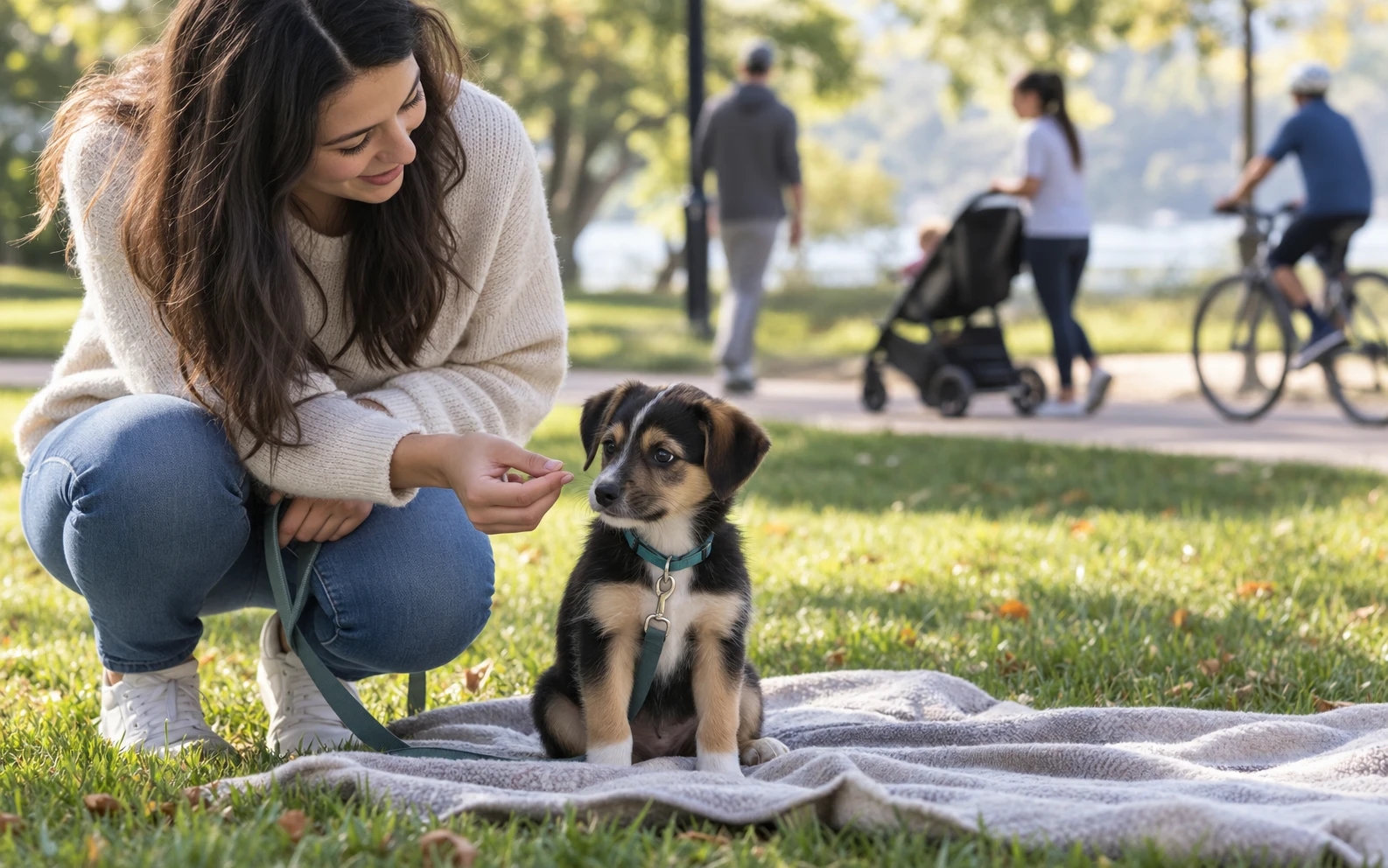
- Sitting together on a clean blanket outdoors
- Taking short car rides
- Introducing household sounds gradually
- Inviting trusted visitors home
- Practicing gentle handling
- Meeting known, healthy, appropriately vaccinated dogs
- Observing traffic from a safe distance
- Using a puppy stroller in appropriate environments
- Attending a professionally managed puppy class when your veterinarian considers it appropriate
AAHA specifically describes options such as carrying puppies, using strollers, observing the environment from a blanket, and interacting with healthy vaccinated adult dogs in clean private spaces. high-traffic areas used by dogs of unknown health or vaccination status may present unnecessary risks. AVSAB recommends avoiding unsanitized, heavily dog-trafficked environments such as dog parks during this vulnerable period.
How to Socialize a Puppy Correctly
The biggest misconception about how to socialize a puppy is that more exposure automatically produces better results. It doesn't. Quality is more important than quantity.
1. Start With Controlled Experiences
Begin with situations you can manage. Rather than immediately visiting a crowded shopping area, allow your puppy to observe a few people from a comfortable distance. Reward relaxed curiosity.
2. Pair New Experiences With Something Positive
Use small treats, toys, praise, play, or gentle interaction to build positive associations.
For example:
- Doorbell rings → treat appears.
- Car starts → favorite toy appears.
- Paws are gently touched → reward follows.
Over time, unfamiliar experiences can become predictable rather than alarming.
3. Keep Socialization Sessions Short
A 5-minute successful experience is often more useful than a 30-minute session that leaves your puppy exhausted or overwhelmed. UC Davis recommends multiple brief encounters rather than pushing puppies through prolonged experiences.
4. Let Your Puppy Choose
Don't force your puppy toward someone they are afraid of. Allow exploration when possible. Choice gives the puppy an opportunity to investigate while maintaining a sense of safety.
5. Watch Your Puppy's Body Language
Your puppy cannot tell you, "This is getting overwhelming." Their body can.
Possible signs of discomfort include:
- Tucked tail
- Ears pulled back
- Shaking
- Lip licking
- Yawning when not tired
- Trying to hide
- Moving away
- Freezing
- Refusing treats
- Avoiding interaction
UC Davis specifically highlights stress signals such as a tucked tail, lip licking, yawning, shaking, and ears held back. If your puppy becomes overwhelmed, increase distance or end the session rather than forcing continued exposure.
A Practical Puppy Socialization Checklist
Instead of thinking only about "meeting people and dogs," organize socialization into categories.
People
Safely introduce your puppy to a variety of people, such as:
- Men and women
- Children under appropriate supervision
- Older adults
- People with facial hair
- People wearing hats
- People carrying bags
- People using mobility aids
Never force physical interaction. Calm observation can itself be valuable.
Sound
Gradually introduce:
- Vacuum cleaners
- Doorbells
- Hair dryers
- Traffic
- Household appliances
- Thunder recordings
- Construction sounds
- Children playing
Start quietly and increase intensity only when your puppy remains comfortable.
Surfaces and Environments
Let your puppy safely experience different textures, including:
- Carpet
- Tile
- Grass
- Concrete
- Gravel
- Wood
- Rubber mats
- Steps
Environmental confidence is an important but frequently overlooked part of puppy development.
Handling
Prepare your puppy for future veterinary and grooming care by positively practicing:
• Paw touching
• Ear examination
• Mouth and teeth checks
• Gentle brushing
• Collar handling
• Brief restraint
• Nail-area touching
UC Davis specifically recommends getting puppies accustomed to having their ears, feet, and mouth handled.
Animals
Interactions with other dogs should be selected carefully. A calm, healthy, appropriately vaccinated adult dog may provide a very different learning experience from an uncontrolled encounter with several unfamiliar dogs. Socialization does not require your puppy to greet every dog they see. Learning to remain relaxed while another dog passes by can be an equally valuable life skill.
Should You Enroll in Puppy Socialization Classes?
A properly managed puppy class can provide controlled opportunities for training and social learning. AVSAB notes that puppies may begin puppy socialization classes as early as 7-8 weeks under appropriate health conditions. Its guidance recommends at least one vaccine set seven days before the first class, initial deworming, and keeping vaccinations current during the course.
However, requirements can differ between programs, and local disease prevalence matters. Ask your veterinarian whether a particular class and timing are appropriate for your puppy.
When evaluating a class, look for one that:
• Uses reward-based training
• Maintains clean facilities
• Requires appropriate health records
• Prevents bullying between puppies
• Keeps groups manageable
• Allows puppies to take breaks
• Does not force fearful interactions
• Teaches owners to recognize canine body language
AVSAB currently recommends reward-based approaches for dog training.
Common Puppy Socialization Mistakes to Avoid
Even well-intentioned puppy owners can accidentally create stressful experiences.
Avoid these common mistakes:
- Waiting too long: Don't automatically postpone every form of socialization until the vaccination series is complete.
- Doing too much at once: Crowds, loud noises, children, and unfamiliar dogs simultaneously may overwhelm a puppy.
- Forcing interactions: Your puppy does not have to greet everyone.
- Ignoring fear signals: Freezing, hiding, or trying to escape should not be dismissed as stubbornness.
- Using punishment: Fear and punishment can undermine the positive associations you are trying to create.
- Stopping after 14-16 weeks: Early socialization matters, but positive learning should continue throughout adolescence and adulthood.
- Confusing excitement with confidence: A puppy that lunges enthusiastically toward every dog isn't necessarily socially skilled.
Puppy Socialization Is a Process, Not a Checklist
The phrase "puppy socialization deadline" can create unnecessary panic. There is an important developmental window, but there isn't a single day after which learning becomes impossible. Think of early puppyhood as an opportunity when your puppy may be particularly receptive to learning about the world. Use that opportunity wisely.
Create positive experiences rather than simply collecting exposures. Introduce your puppy to the sights, sounds, people, handling, animals, and environments that will be part of their future life, but always pay attention to their comfort level. Most importantly, continue building those skills after the early socialization window closes.
Give Your Puppy the Right Start
The early weeks of puppyhood pass quickly, and they provide an important opportunity to help your puppy learn that the world can be safe and predictable. Start early, move at your puppy's pace, reward calm behavior, and prioritize positive experiences over the number of experiences.
If you're unsure how to balance puppy socialization before vaccinations with infectious-disease safety, talk with your veterinarian. They can help you create an age-appropriate socialization plan based on your puppy's health, vaccination history, lifestyle, and disease risks in your local area. A thoughtful start today can help build the confidence your puppy needs for many years to come.