

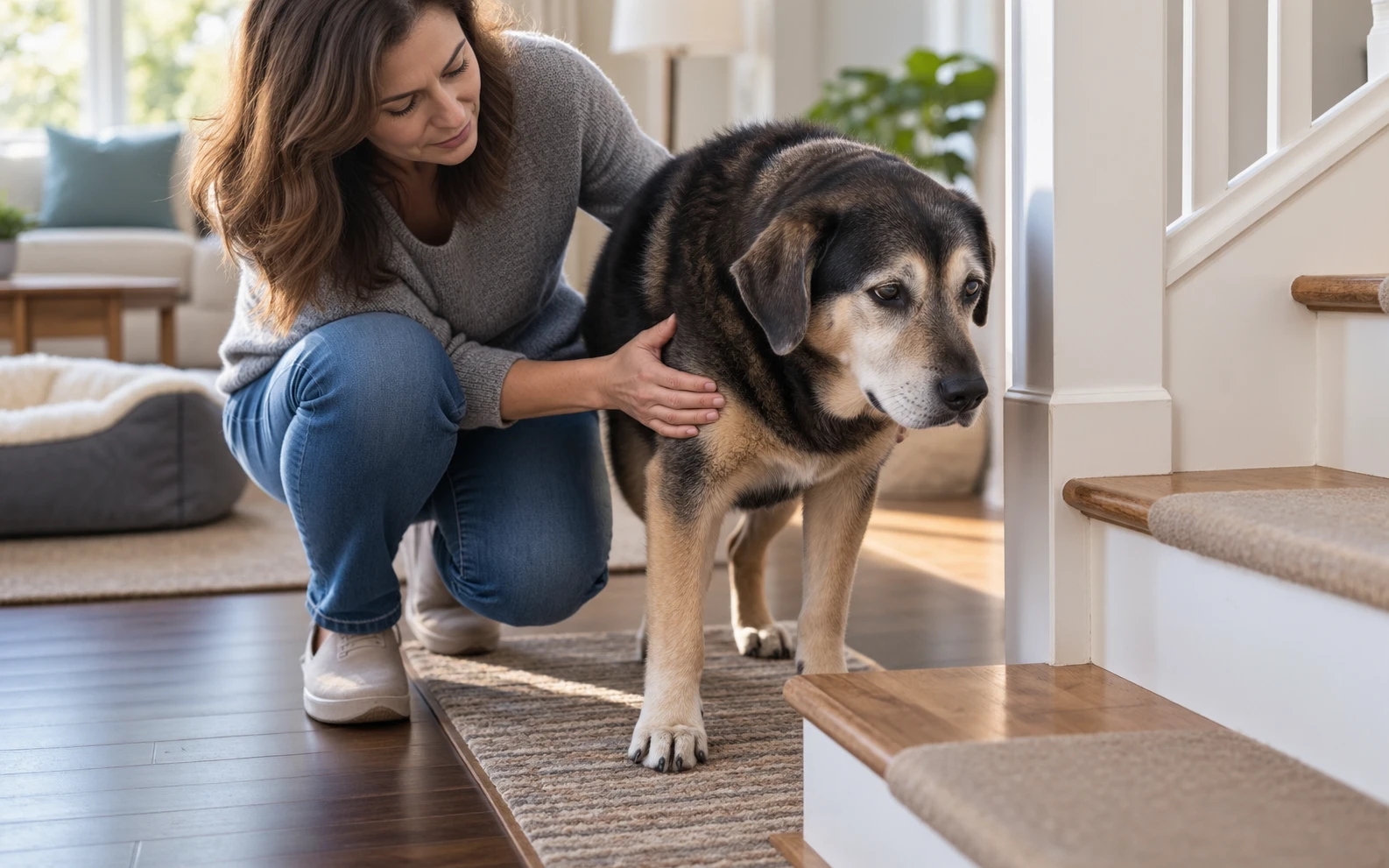
Watching your senior dog hesitate before climbing the stairs, struggle to stand after a nap, or suddenly lose interest in a favorite walk can be difficult, and these changes may be more than simply “getting old.” Arthritis in senior dogs can cause persistent pain and gradually reduce mobility, but recognizing the early signs can help owners and veterinarians develop a management plan before discomfort significantly affects quality of life.
Osteoarthritis (OA) is the most common form of arthritis in dogs. The U.S. Food and Drug Administration (FDA) estimates that osteoarthritis affects at least 25% of dogs at some point during their lifetime. Understanding the symptoms, risk factors, diagnosis, and available approaches to arthritis pain management for dogs can help you make informed decisions about your aging companion's care.
What Is Arthritis in Senior Dogs?
Arthritis is a general term describing inflammation and disease affecting one or more joints. In older dogs, one of the most common forms is osteoarthritis, also known as degenerative joint disease. Healthy joints contain cartilage that helps cushion the ends of bones and allows smooth movement. With osteoarthritis, this protective cartilage progressively deteriorates, contributing to inflammation, reduced joint movement, pain, and structural changes within the joint.
Although arthritis is commonly associated with aging, joint disease should not simply be dismissed as a normal part of getting older. AAHA's senior-care guidance notes that owners may interpret behavioral and mobility changes as normal aging when they can actually reflect chronic pain.
What Are the Early Signs of Arthritis in Senior Dogs?
One challenge with arthritis in senior dogs is that early symptoms can be subtle. Dogs cannot tell us that a hip or knee hurts. Instead, owners often notice small changes in movement, activity, posture, or behavior.
1. Stiffness After Rest
Your dog may appear stiff when getting up after sleeping or lying down for an extended period. You might notice slow movements for the first few minutes before your dog begins walking more comfortably.
2. Difficulty Standing Up
A dog with joint discomfort may need extra time or effort to rise from the floor. You may see your dog reposition their legs several times before successfully standing.
3. Reluctance to Use Stairs
A dog that once raced upstairs may suddenly stop at the bottom or move cautiously. Changes in willingness to climb stairs can be an important mobility clue, especially when combined with other symptoms.
4. Less Interest in Walking or Playing
A senior dog experiencing joint pain may still become excited when you pick up the leash but tire sooner than before. Others may stop initiating play or prefer shorter walks.
5. Limping or Favoring One Leg
Limping can indicate orthopedic discomfort, although arthritis is only one possible cause. Persistent or recurring limping deserves veterinary evaluation rather than being automatically attributed to age.
6. Difficulty Jumping
Think about everyday activities your dog used to perform easily.
They may suddenly hesitate before:
- Jumping onto furniture
- Getting into the car
- Climbing onto a bed
- Navigating steps
- Entering or exiting elevated areas
These seemingly minor changes can provide valuable information about senior dog joint pain.
7. Behavioral Changes
Chronic pain doesn't always look like limping. A dog experiencing discomfort may become less social, restless, irritable, withdrawn, or sensitive when certain areas are touched. AAHA emphasizes that behavioral changes associated with chronic pain can be subtle, which is one reason careful observation at home matters.
Why Do Older Dogs Develop Arthritis?
Age itself isn't the only factor. Several conditions can increase stress on joints or contribute to the development and progression of osteoarthritis.
Potential risk factors include:
- Previous joint injuries
- Hip or elbow dysplasia
- Joint instability
- Previous orthopedic surgery
- Excess body weight
- Repetitive stress on joints
- Abnormal joint development
- Large body size
- Age-related changes
Maintaining an appropriate body condition is particularly important for dogs with mobility problems because excess weight adds mechanical stress to painful joints. Your veterinarian can assess both body condition and muscle condition and recommend an appropriate nutrition and activity plan.
How Is Arthritis in Senior Dogs Diagnosed?
If you notice changes in your dog's mobility, schedule a veterinary examination rather than trying to diagnose arthritis at home. A veterinarian may begin by asking detailed questions about your dog's daily routine.
They may want to know:
- When the mobility change began
- Whether stiffness is worse after rest
- How long your dog can comfortably walk
- Whether stairs have become difficult
- Whether your dog hesitates before jumping
- Whether appetite or behavior has changed
- Whether your dog has experienced previous injuries
The physical examination may include evaluation of the dog's gait, posture, joints, muscles, range of motion, and areas of discomfort. Depending on the findings, diagnostic imaging such as X-rays may be recommended to evaluate joint changes and rule out other causes of pain.
Record Your Dog Moving at Home
Dogs sometimes move differently at a veterinary clinic because of excitement, stress, adrenaline, or unfamiliar surroundings. AAHA specifically notes that videos showing pets walking, moving, or jumping in their normal environment can help veterinarians assess musculoskeletal pain and mobility.
Consider recording short videos of your dog:
- Getting up after sleeping
- Walking across the room
- Going upstairs
- Walking outside
- Getting into the car
These videos can also help you compare mobility over time.
How Can I Help My Senior Dog With Arthritis Pain?
There is rarely one universal solution for canine arthritis. AAHA recommends an integrative, multimodal approach to managing pain and mobility problems in senior pets. This can involve medications, weight management, rehabilitation, environmental changes, physical modalities, and other veterinarian-selected therapies. The appropriate combination depends on your dog's age, overall health, arthritis severity, lifestyle, and other medical conditions.
Veterinary Medication for Dog Arthritis Pain Relief
Veterinarians may prescribe medications to control pain and inflammation associated with osteoarthritis. Nonsteroidal anti-inflammatory drugs (NSAIDs) are commonly used for canine osteoarthritis. FDA-approved options for dogs are prescription medications and should be selected and monitored by a veterinarian.
Other prescription approaches may also be considered depending on the individual dog. For example, the FDA approved bupivacaine, a monoclonal antibody administered by injection, for controlling pain associated with osteoarthritis in dogs. The best medication strategy should always be individualized by your veterinarian.
Never Give Human Pain Medication Without Veterinary Guidance
Seeing your dog struggle may make you want to reach for medication from your own medicine cabinet. Don't give medications such as ibuprofen, naproxen, aspirin, acetaminophen, or another pet's prescription medication unless your veterinarian specifically directs you to do so. Human pain relievers can behave differently in dogs and may cause serious adverse effects. The FDA advises owners to contact a veterinarian before giving pets pain medication.
Dogs receiving long-term NSAID therapy may also require periodic monitoring. The FDA recommends discussing baseline and follow-up blood testing with your veterinarian because liver, kidney, gastrointestinal, and other adverse effects can occur.
Weight Management Can Reduce Joint Stress
Weight management is an important component of arthritis care. Every extra pound adds additional load to weight-bearing joints, making movement more demanding for a dog already experiencing discomfort.
Your veterinarian can help establish an appropriate calorie target based on your dog's ideal body condition rather than relying only on the number on the scale. The goal isn't simply weight loss it is maintaining a healthy body composition while preserving muscle needed for movement and stability.
Exercise Is Still Important
Arthritis doesn't necessarily mean your dog should stop exercising. In many cases, controlled activity can help preserve mobility, muscle strength, balance, and overall well-being.
Depending on your veterinarian's recommendations, activities may include:
- Short, controlled walks
- Gentle range-of-motion exercises
- Rehabilitation exercises
- Hydrotherapy
- Gradual strength-building activities
Avoid suddenly introducing intense exercise to an older dog with mobility problems. A practical example is replacing one exhausting 45-minute weekend walk with several shorter, controlled walks throughout the week, if your veterinarian determines that schedule is appropriate.
Physical Rehabilitation for Senior Dogs
Canine rehabilitation can be incorporated into arthritis pain management for dogs. AAHA notes that rehabilitation may use approaches such as exercise therapy, hydrotherapy, manual therapy, acupuncture, and selected physical modalities to help manage pain and improve mobility and balance. A veterinarian or qualified veterinary rehabilitation professional can determine which therapies are appropriate for your dog's condition.
Make Your Home Arthritis-Friendly
Small environmental changes can make everyday movement easier for an arthritic dog.
Consider:
- Placing rugs or non-slip mats on slippery floors
- Using ramps where appropriate
- Providing a supportive, comfortable bed
- Keeping food and water easily accessible
- Using a properly fitted support harness when necessary
- Reducing unnecessary jumping
- Blocking unsafe stairways when mobility is poor
- Keeping frequently used areas easy to access
AAHA specifically recommends considering environmental modifications such as ramps, better floor traction, supportive harnesses, and appropriate bedding for senior pets with reduced mobility. For example, an older dog may struggle to cross a polished tile floor simply because they cannot get enough traction. Adding non-slip runners can make routine movement less stressful.
What Is the Best Treatment for Arthritis in Older Dogs?
There isn't one best treatment for arthritis in older dogs that works for every patient. One dog may respond well to weight management, prescription medication, controlled exercise, and home modifications. Another may require additional rehabilitation or different pain-management strategies.
The strongest arthritis plan is usually individualized and multimodal. Your veterinarian should also consider other medical conditions common in older dogs when choosing medications or therapies.
How Can You Tell Whether Arthritis Treatment Is Working?
Don't rely only on whether your dog is limping. Instead, track specific everyday activities.
Ask yourself:
- Can my dog stand more easily?
- Are walks becoming more comfortable?
- Is my dog sleeping comfortably?
- Are stairs easier to navigate?
- Is my dog interacting with family again?
- Has interest in play increased?
- Can my dog comfortably go outside to toilet?
Consider keeping a weekly mobility journal and recording occasional videos. Small improvements in everyday function can be meaningful indicators of better comfort and quality of life.
When Should You Contact a Veterinarian?
Senior dogs also benefit from regular preventive evaluations. AAHA recommends more frequent veterinary assessments for senior pets and emphasizes early detection and monitoring of age-related conditions.
Arthritis Doesn't Have to Define Your Senior Dog's Life
Arthritis in senior dogs is a chronic condition, but chronic doesn't mean nothing can be done. Recognizing early changes in mobility gives you an opportunity to work with your veterinary team on pain control, healthy weight, appropriate activity, rehabilitation, and a safer home environment.
Pay attention to the little changes: taking longer to stand, avoiding stairs, shortening walks, or hesitating before jumping. Those behaviors can provide valuable clues about how your dog is feeling.
If your senior dog is showing signs of stiffness or joint pain, consider recording their movement at home and discussing those changes at their next veterinary visit. A personalized mobility and pain-management plan may help them stay comfortable, engaged, and active through their senior years.